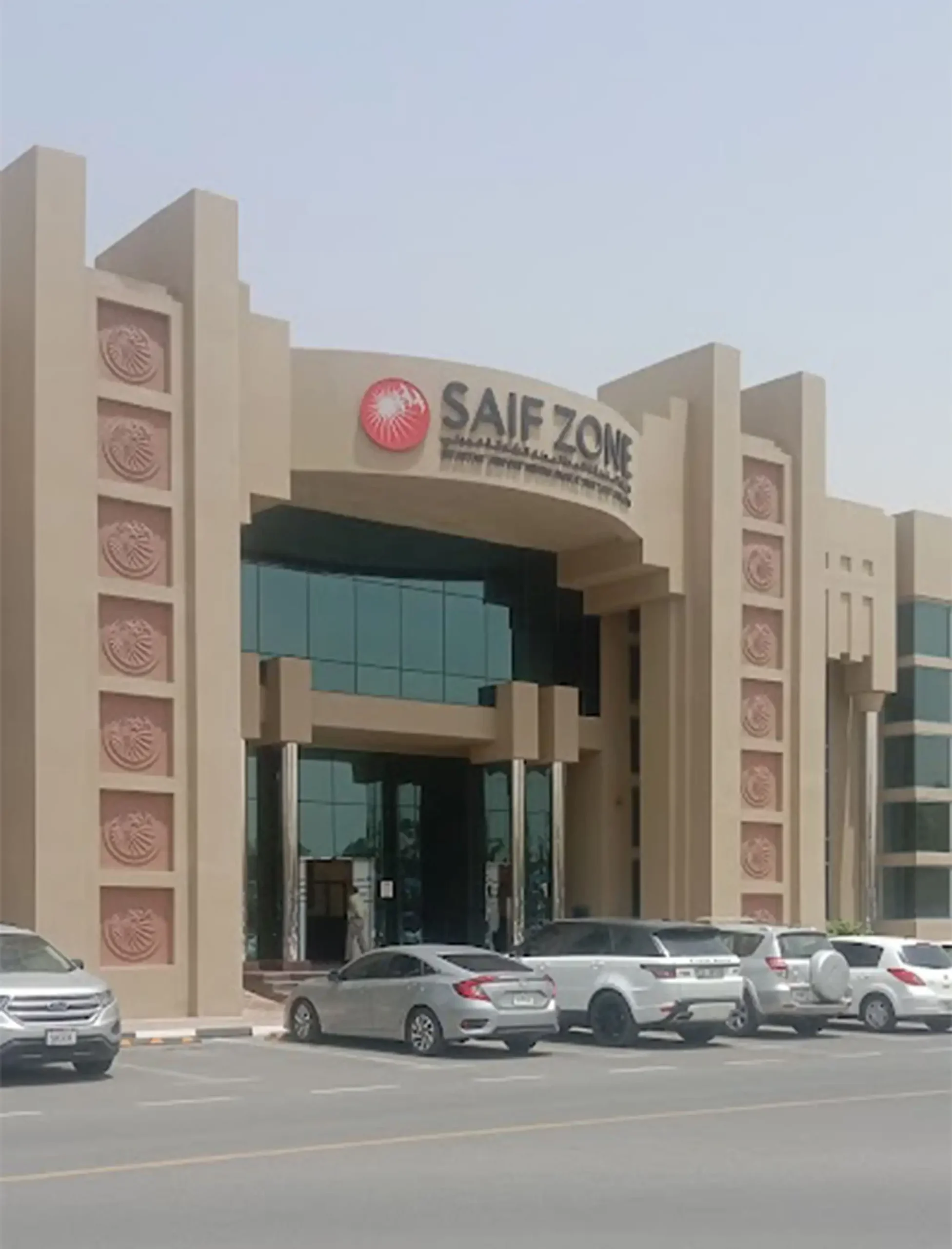
Company Liquidation in SAIF Zone
What is

Company Liquidation in SAIF Zone

Company liquidation, also known as company dissolution or winding-up, is the legal process of closing a business entity and removing its name from the SAIF Zone commercial registry. During liquidation, all business activities stop, assets are evaluated and sold, outstanding debts are settled, and any remaining funds are distributed among shareholders.

In the Sharjah Airport International Free Zone (SAIF Zone), one of the UAE’s most prominent free zones, the liquidation process is regulated by the SAIF Zone Authority in coordination with UAE federal laws. A company is officially dissolved once the authority issues a license cancellation certificate, confirming that all financial, legal, and administrative obligations have been cleared.

Types of Liquidation in SAIF Zone

Companies in SAIF Zone can undergo two main types of liquidation, depending on their financial position:

Voluntary Liquidation

nitiated by shareholders when they choose to close the company for strategic, financial, or operational reasons. This is the most common form of liquidation in SAIF Zone.
Voluntary Liquidation

Compulsory Liquidation

Ordered by the court or regulatory authorities in cases of insolvency, bankruptcy, or non-compliance. In this case, a court-appointed liquidator handles the winding-up process.
Compulsory Liquidation

For most Free Zone Establishments (FZE) and Free Zone Companies (FZC) in SAIF Zone, voluntary liquidation is the standard route.

Step-by-Step Process of Company Liquidation in SAIF Zone

Step 1: Pass a Board or Shareholder Resolution

The process begins with a formal board resolution passed by shareholders or directors to dissolve the company.

  • The resolution must clearly mention the reason for liquidation.
  • It must be signed and stamped by all shareholders.
  • If the shareholder is a foreign company, the resolution should be attested by the UAE Embassy or Consulate in the country of origin.

Step 2: Appointment of a Licensed Liquidator

SAIF Zone requires companies — especially LLCs and FZCs — to appoint a licensed liquidator (usually an approved auditing firm).

  • The liquidator takes control of all company assets and liabilities.
  • They must issue an acceptance letter confirming their appointment.
  • Once appointed, the powers of directors are transferred to the liquidator.

Step 3: Notification to SAIF Zone Authority

Submit the official liquidation request to the SAIF Zone Authority along with:

  • The signed and notarized board resolution.
  • The liquidator’s appointment letter.
  • Original company documents (trade license, incorporation certificate, MOA, tenancy agreement, share certificates, and investor agreements). If any original documents are missing, a Lost Record Certificate must be obtained from the local police station.

Step 4: Settle All Liabilities

Before deregistration, the company must settle all financial and legal obligations:

  • Employee Visa Cancellations: All active employment and partner visas must be cancelled through immigration.
  • End-of-Service Benefits: Pay pending salaries and gratuities as per UAE labour law.
  • Outstanding Debts: Clear all dues to suppliers, landlords, service providers, and financial institutions.
  • Lease Termination: Cancel the tenancy contract and return all premises keys to SAIF Zone.
  • Bank Account Closure: Obtain a bank letter confirming the account has been officially closed.

Step 5: Obtain Mandatory Clearances

The following No Objection Certificates (NOCs) and clearances must be obtained:

  1. SAIF Zone Facilities Management Clearance – To confirm that office, warehouse, or land leases are closed.
  2. Visa & Immigration Clearance – For visa and establishment card cancellation.
  3. Customs Clearance – To ensure no pending customs or shipment duties.
  4. Etisalat / Du Clearance – For telecom service disconnection.
  5. Post Office & Bank Clearance – Confirming no remaining dues.

Step 6: VAT Deregistration and Tax Clearance

If your company is VAT-registered, you must apply for VAT deregistration through the Federal Tax Authority (FTA) within 20 business days of becoming eligible. Failure to do so can result in penalties up to AED 10,000.

You must also:

  • Submit final VAT returns.
  • Obtain a tax clearance certificate from FTA before liquidation approval.

Step 7: Publication of Liquidation Notice

The liquidator must publish an official public notice of liquidation in two local newspapers (Arabic and English). This notice allows creditors to file any claims within 45 days.

Step 8: Auditor’s Liquidation Report

Once the notice period ends and all claims are settled, the liquidator prepares an Auditor’s Liquidation Report, confirming that:

  • All debts are cleared.
  • Assets have been liquidated or transferred.
  • Financial records are properly closed.

This report is submitted to SAIF Zone for final review.

Step 9: License Cancellation & Refund

Upon successful verification, SAIF Zone issues a License Cancellation Certificate, officially closing the company. Any refundable deposits or security payments held by the free zone are reimbursed to the company account.

Key Departments & Stakeholders Involved

Below are the main authorities and stakeholders you must interact with when liquidating a company in SAIF Zone (Sharjah Airport International Free Zone), plus the practical role each plays in the process. Include these clearances in your checklist to avoid delays.

  • SAIF Zone Authority (SAIF Zone / Free Zone Registrar)
    Role: Accepts the liquidation application, issues provisional/ final deregistration certificates, confirms lease return and facility handover, calculates outstanding free-zone fees, and releases refunds.
  • Federal Tax Authority (FTA)
    Role: VAT deregistration, final VAT returns and tax clearance. Must be completed early (within the FTA timeframe) to avoid fines.
  • Ministry of Human Resources & Emiratisation (MOHRE)
    Role: Confirms settlement of labour obligations; issues labour/establishment-related clearances where required (end-of-service, final settlements).
  • General Directorate of Residency & Foreigners Affairs (GDRFA) – Sharjah (Immigration)
    Role: Cancels employee, investor and dependent visas and issues immigration clearance letters required for final deregistration.
  • Sharjah Customs / Port Authority
    Role: Customs clearance for any import/export obligations; issues NOC when goods, bonded stock and customs liabilities are settled.
  • Telecommunications Providers (Etisalat / Du)
    Role: Final bill settlement and NOC for telecom lines and services registered under the company.
  • Utility Provider (SEWA / FEWA as applicable)
    Role: Final settlement for electricity, water, gas and issuance of utility clearance certificate (depends on location/premises).
  • Corporate Bank(s)
    Role: Close corporate accounts, settle loans/charges and issue bank closure/clearance letters.
  • Landlord / Facility Management
    Role: Confirm termination of tenancy, return of premises and keys, inspection and issue landlord NOC or handover certificate.
  • Sharjah Police / Local Police (Lost Documents)
    Role: Issue police reports / lost record certificates if original company documents are missing—often required before the free zone accepts the file.
  • Sharjah Chamber of Commerce (if applicable)
    Role: Clearance where trade membership or chamber-related obligations exist.
  • Traffic Department (if company vehicles registered)
    Role: Clear any vehicle fines and confirm vehicle deregistration transfers or cancellations.
  • Environmental Protection / Civil Defense (if industrial activities)
    Role: NOCs or clearance letters confirming environmental or safety obligations are met for industrial/business activities.
  • Auditor / Licensed Liquidator (appointed party)
    Role: Prepares liquidation/audit reports, publishes public notice (if required), collects creditor claims, coordinates settlements and compiles final submission to SAIF Zone.

Required Documents for Company Liquidation in SAIF Zone

To initiate liquidation, you’ll need to provide:

  • Board Resolution for Liquidation (attested and notarized)
  • Trade License (original)
  • Certificate of Incorporation
  • Memorandum & Articles of Association (MOA/AOA)
  • Liquidator’s Acceptance Letter
  • Passport copies of shareholders and directors
  • Lease Agreement / NOC from Landlord
  • Clearance letters (customs, utilities, telecom, bank)
  • Final Audit Report (if required)
  • VAT Deregistration Certificate

Common Challenges During SAIF Zone Liquidation

  • Delays in obtaining NOCs from utilities or customs.
  • Unsettled employee visas or labour fines.
  • Missing original company documents.
  • Incomplete VAT deregistration or pending tax obligations.
  • Late notification penalties from SAIF Zone Authority.

Working with a professional liquidator or consultant helps avoid these issues and ensures a seamless process.

Timeline & Estimated Cost

Estimated Duration: 30–60 days (depending on company size, lease type, and clearance complexity).

Approximate Cost:

    • Normal closure: AED 2,000–8,000
    • Late closure without notice: AED 5,000 penalty
    • Publication notice: AED 500
    • Visa cancellation: AED 510–1,295 per visa. 

Additional costs apply for auditor and liquidator services, VAT deregistration, and clearances.

Note: Costs are approximate and may vary depending on company structure, activity, and pending dues.

The Capital Zone Liquidators

Why Choose Our Services?

At The Capital Zone, we manage the entire SAIF Zone liquidation process from start to finish efficiently, legally, and with minimal hassle.

Our services include:

  • Drafting and notarizing board resolutions.
  • Appointing licensed liquidators and preparing liquidation reports.
  • Managing VAT deregistration, NOCs, and visa cancellations.
  • Coordinating directly with SAIF Zone Authority for faster processing.
  • Securing final license cancellation certificates and refund approvals.

With The Capital Zone’s expert support, you can close your SAIF Zone company confidently, avoid compliance risks, and ensure full legal clearance in record time.

Frequently
Asked Questions

Yes, for LLCs and FZCs, a licensed liquidator is usually required. However, small FZE setups may not need one this depends on SAIF Zone’s case-by-case decision.

Typically between 30 and 60 days, depending on the complexity of assets, number of visas, and pending clearances.

Yes. With proper authorization, The Capital Zone can complete the process remotely shareholders can digitally sign documents and power of attorney papers.

The FTA can impose a fine of AED 10,000 for not applying within 20 business days.

The Trade License Cancellation Certificate issued by the SAIF Zone Authority is the official proof that your company is legally dissolved.

Looking to set up your company in the UAE?

TheCapitalZone.com makes business formation easy, quick, and hassle-free.

Your business journey starts here.
Let the experts handle the paperwork while you focus on growth!

Start Your Company Today Book a Free Consultation

Contact Us

OR