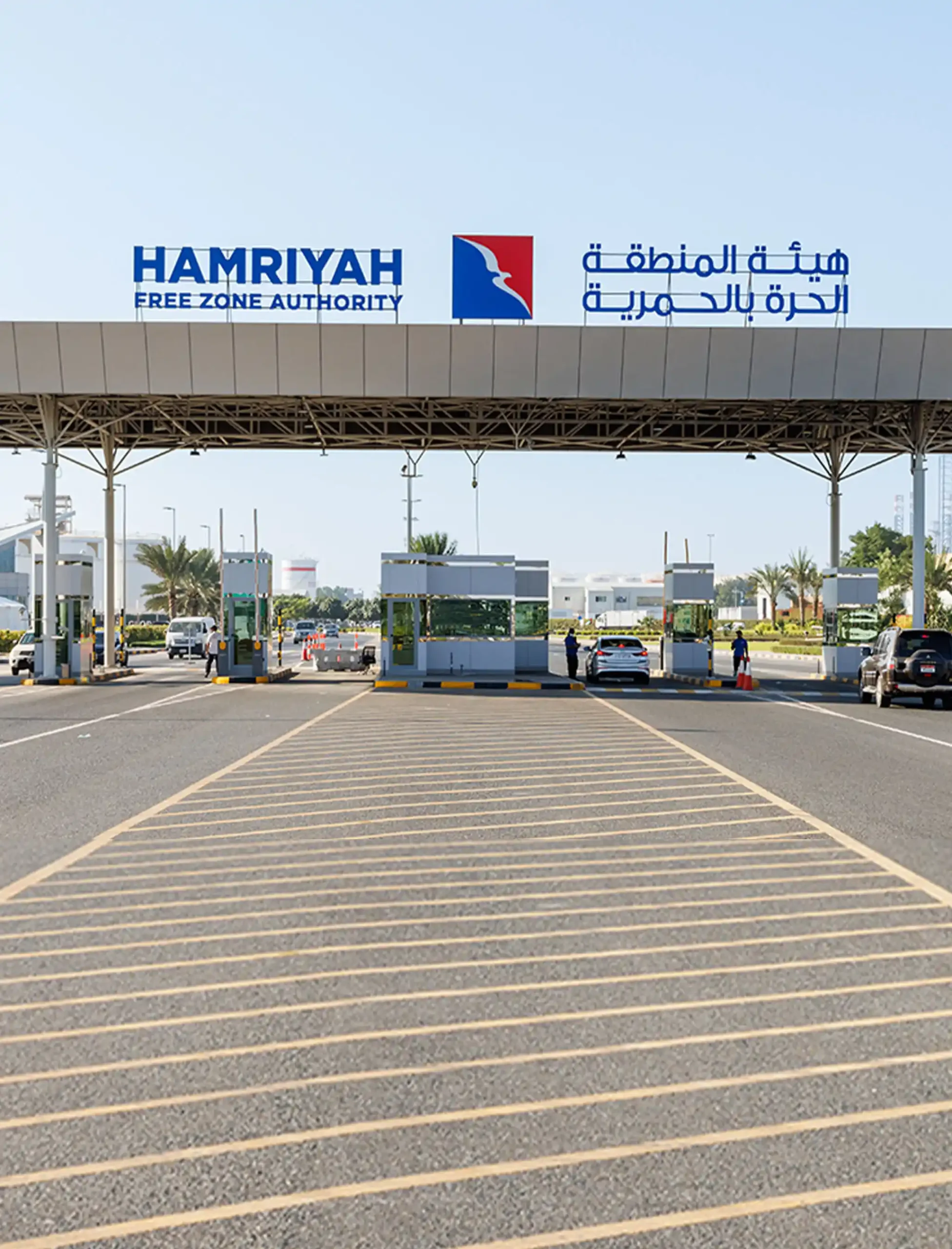
Company liquidation in Hamriyah Free Zone Authority (HFZA) is the formal legal process of winding up a business registered in the zone. It involves appointing a licensed liquidator (where required), settling outstanding debts and employee entitlements, cancelling visas and utility accounts, obtaining clearance letters from relevant authorities (customs, MOHRE, immigration, utilities, FTA where applicable), and submitting a final liquidation report so HFZA can cancel the trade licence and deregister the company. Liquidation ensures creditors are paid, legal obligations are closed off, and the company is removed from the free-zone registry without future liabilities.
The Hamriyah Free Zone Authority (HFZA), established in 1995, is one of the UAE’s leading industrial and commercial hubs, offering 100% foreign ownership, zero corporate tax, and access to major ports and shipping routes. While the zone provides a business-friendly environment, some companies eventually decide to cease operations due to financial, strategic, or operational reasons.
If you’ve decided to close your company in the Hamriyah Free Zone, the process involves formal liquidation, requiring a licensed liquidator, regulatory notifications, and multiple clearances to ensure full compliance with UAE laws.
There are two main types of company liquidation in the Hamriyah Free Zone Authority (HFZA) Voluntary Liquidation and Involuntary Liquidation. Understanding the difference between these helps business owners follow the correct process and avoid legal or financial complications.
This type of liquidation is initiated by the shareholders or directors of the company when they decide to close the business on their own terms.
Key features:
This is the most common and straightforward form of liquidation for businesses in HFZA.
Involuntary liquidation occurs when a company is forced to close by HFZA or a UAE court, typically due to:
In such cases, the Free Zone Authority or the court appoints an official liquidator to manage the winding-up process on behalf of creditors and authorities.
This process is more complex, as it may involve legal proceedings, audits, and debt recovery measures before the company is officially struck off.
The liquidation process begins with the Board of Directors or Shareholders passing a formal resolution to close the company.
This resolution acts as the legal foundation for initiating the winding-up procedure.
The company must appoint a licensed audit firm or approved liquidator to manage the process.
Notify HFZA formally about the liquidation decision by submitting the following:
HFZA will review and acknowledge the liquidation request before you proceed further.
Before obtaining final approval, ensure all dues are cleared:
During liquidation, you must comply with several UAE regulations:
HFZA requires a liquidation notice to be published in both English and Arabic newspapers.
Once all liabilities are cleared, the liquidator prepares a Final Liquidation Report, including:
These documents are submitted to HFZA for review.
After verification, HFZA issues an Official Termination / Liquidation Certificate.
This legally dissolves the company and confirms its removal from the HFZA register.
Department | Role in Liquidation |
Hamriyah Free Zone Authority (HFZA) | Main authority overseeing deregistration and approval |
Federal Tax Authority (FTA) | VAT deregistration and tax clearance |
Ministry of Human Resources & Emiratisation (MOHRE) | Employee visa and labor card cancellation |
General Directorate of Residency & Foreigners Affairs (GDRFA – Sharjah) | Residence visa cancellation for investors and staff |
Sharjah Electricity, Water and Gas Authority (SEWA) | Utility bill clearance |
Customs Department | NOC for import/export companies |
Telecommunication Providers (Etisalat / Du) | Closure of telecom accounts |
Commercial Banks | Account closure and clearance letter |
Sharjah Chamber of Commerce | Deregistration of trade membership (if applicable) |

Employee visa issues or labor disputes before closure
Yes, the appointment of a licensed liquidator is mandatory for both Free Zone Establishments (FZE) and Free Zone Companies (FZC) undergoing liquidation in Hamriyah Free Zone.
The liquidator’s role includes:
Only audit firms approved and licensed in the UAE are eligible to act as official liquidators in HFZA.

The liquidation process in the Hamriyah Free Zone typically takes 30 to 90 days, depending on:
Estimated Cost:
AED 5,000 – 20,000+, depending on:
Note: Costs are approximate and may vary depending on company structure, activity, and pending dues.
At The Capital Zone, we simplify the entire company liquidation process in Hamriyah Free Zone (HFZA) from documentation to final deregistration. Our team works directly with HFZA and other UAE authorities to ensure a smooth, compliant, and time-efficient closure of your business.
Here’s how we assist you at every stage:
With The Capital Zone’s expert guidance, you can close your business hassle-free, stay compliant with UAE laws, and avoid unnecessary delays or penalties.
Usually between 1 to 3 months, depending on the company structure and clearance speed.
Yes, a licensed liquidator must be appointed to prepare the liquidation report.
The FTA imposes a fine of AED 10,000 for late VAT deregistration.
Yes. Once the previous company is fully closed and cleared, you can apply for a new license anytime.
Yes, publication in both English and Arabic newspapers is mandatory for 15–45 days.
On average AED 5,000 to 20,000, depending on visa cancellations and other clearances.
Technically yes, but most businesses hire a professional consultant or liquidator to avoid delays and fines.

TheCapitalZone.com makes business formation easy, quick, and hassle-free.
Your business journey starts here.
Let the experts handle the paperwork while you focus on growth!
Start Your Company Today Book a Free Consultation